
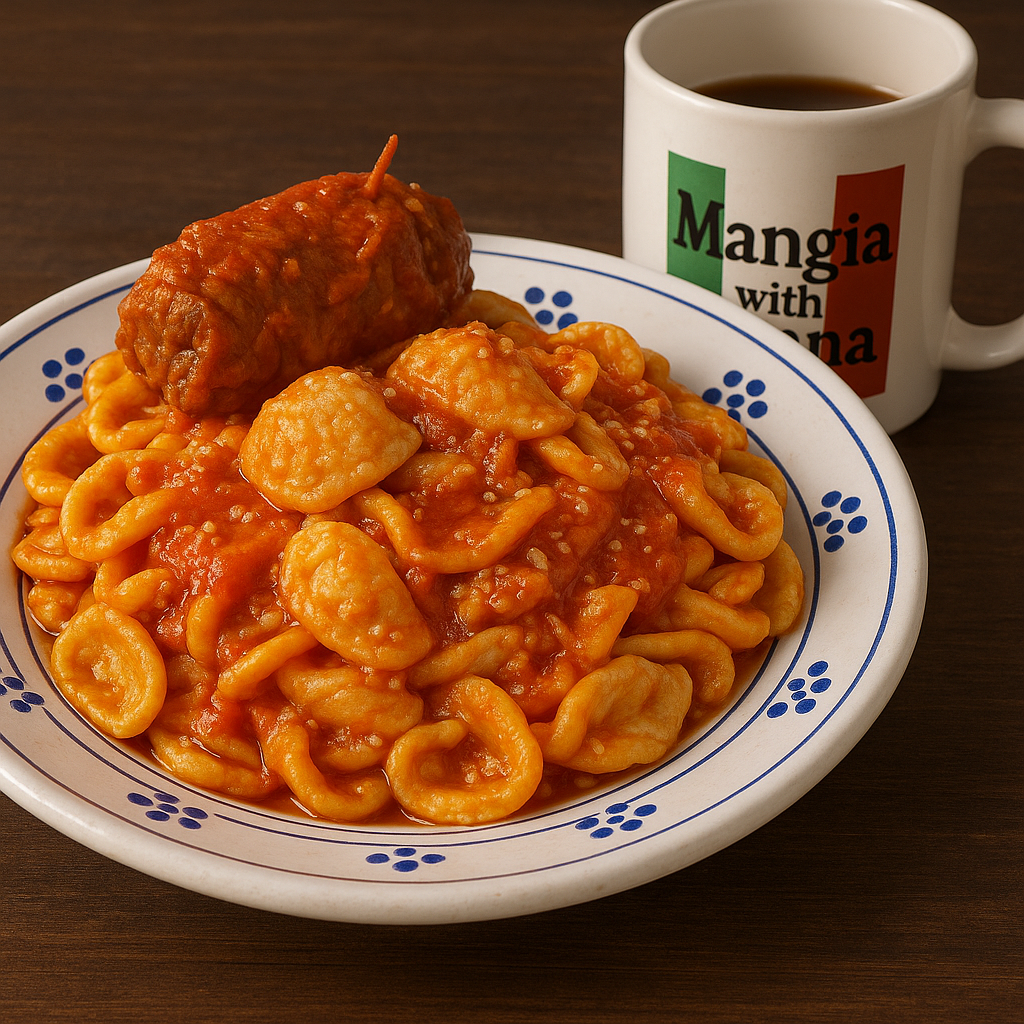
A Sunday Classic from Bari
This dish is a Sunday staple in Bari’s traditional cuisine. In many families across Southern Italy, ragù is a must on Sundays — but in my family, we make it whenever the craving hits!
Sometimes, we even enjoy it as a sandwich, just like my mother, Lellina, used to make.
Every birthday, she would prepare Braciole alla Barese sandwiches for everyone — children, grandchildren, and sometimes even neighbors 😊
She was from another generation and always tied the braciole with kitchen thread — she even included it in my wedding trousseau! Nowadays, I use toothpicks, but I always remind everyone at the table how many I used per roll — safety first!
And let me tell you — when someone from Southern Italy living abroad comes home, this is the first dish they ask for. Who could blame them? Made the traditional way, it’s pure comfort and flavor.
As a proud nonna, I still make the sandwiches and the homemade orecchiette to go with the sauce — sometimes I even start prepping the day before.
So, what are we waiting for?
🍝 Cooking Time and Servings
Prep Time: 3 hours
Cook Time: 2 hours 30 minutes
Servings: 8
Ingredients
10 thin slices of horse meat or veal (I use horse meat, but veal works great)
1 slice of pork pancetta (about 3 oz)
3 pieces of boneless veal (optional, for extra flavor in the sauce)
4 ½ lbs fresh Piccadilly or San Marzano tomatoes (or ripe local tomatoes in season)
1 can (28 oz) crushed or peeled tomatoes — only if your fresh tomatoes are too watery
½ cup dry white wine
6 parsley stems, finely chopped
4 fresh basil leaves, divided
4 bay leaves
⅓ cup extra virgin olive oil (about 5 Tbsp)
½ small onion, finely chopped
1 garlic clove, minced
½ cup grated Parmigiano Reggiano or provolone cheese (Bari locals prefer provolone)
Salt, to taste
Freshly ground black pepper, to taste
Instructions
Prepare the Braciole Filling:
Lay out the meat slices on a tray. Sprinkle lightly with salt and pepper.
Finely chop the garlic and place a few small bits on each slice.
Dice a few cherry tomatoes and add them to each piece of meat.
Tear up 2 basil leaves and sprinkle them over.
Add a small handful of grated cheese and a bit of finely chopped parsley.Roll and Secure:
Roll up each slice tightly and secure with 2–3 toothpicks (depending on size).Prepare the Tomato Sauce:
Bring a large pot of water to a boil. Add the fresh tomatoes and boil for 2–3 minutes, until the skins start to peel.
Drain, rinse under cold water, peel, and blend with an immersion blender until smooth.Brown the Braciole:
Preheat your oven to 300°F (150°C).
In a large, shallow pot or Dutch oven, heat the olive oil.
Add the chopped onion, bay leaves, and the remaining minced garlic.
Place the braciole in the pan and sear them over medium-high heat for about 5–6 minutes, turning occasionally until browned.Deglaze and Add Sauce:
Pour in the white wine, letting it simmer until the alcohol evaporates.
Add the blended tomatoes, remaining basil, and salt to taste.
If the sauce looks too thin, mix in the canned tomatoes as well.Slow Cook in the Oven:
Cover the pot with an oven-safe lid (leaving a small gap so steam can escape).
Transfer the pot to the oven and cook for 2 hours, removing the lid for the last 30 minutes so the sauce thickens.
The meat should be incredibly tender — if not, cook a little longer.
Serving Suggestions
Serve the braciole over a generous plate of homemade orecchiette or use the sauce to toss your favorite pasta.
For a traditional treat, enjoy the leftover braciole inside a crusty sandwich, just like Nonna Lellina used to make!
💡 Tips from Nonna
You can tie the braciole with kitchen twine instead of toothpicks if you prefer.
Make the sauce a day ahead — it tastes even better the next day.
If you can find horse meat, try it — it’s the authentic Baresian version!
Nutrition Facts (Per Serving)
| Calories | Protein | Carbs | Fat |
|---|---|---|---|
| 590 kcal | 37 g | 48 g | 25 g |
One-Pot Orecchiette with Braciole
Notes
Ingredients
- 10 thin slices of horse meat or veal (I use horse meat, but veal works great)
- 1 slice of pork pancetta (about 3 oz)
- 3 pieces of boneless veal (optional, for extra flavor in the sauce)
- 4 ½ lbs fresh Piccadilly or San Marzano tomatoes (or ripe local tomatoes in season)
- 1 can (28 oz) crushed or peeled tomatoes — only if your fresh tomatoes are too watery
- ½ cup dry white wine
- 6 parsley stems, finely chopped
- 4 fresh basil leaves, divided
- 4 bay leaves
- ⅓ cup extra virgin olive oil (about 5 Tbsp)
- ½ small onion, finely chopped
- 1 garlic clove, minced
- ½ cup grated Parmigiano Reggiano or provolone cheese (Bari locals prefer provolone)
- Salt, to taste
- Freshly ground black pepper, to taste
Instructions
- Prepare the Braciole Filling:
Lay out the meat slices on a tray. Sprinkle lightly with salt and pepper.
Finely chop the garlic and place a few small bits on each slice.
Dice a few cherry tomatoes and add them to each piece of meat.
Tear up 2 basil leaves and sprinkle them over.
Add a small handful of grated cheese and a bit of finely chopped parsley. - Roll and Secure:
Roll up each slice tightly and secure with 2–3 toothpicks (depending on size). - Prepare the Tomato Sauce:
Bring a large pot of water to a boil. Add the fresh tomatoes and boil for 2–3 minutes, until the skins start to peel.
Drain, rinse under cold water, peel, and blend with an immersion blender until smooth. - Brown the Braciole:
Preheat your oven to 300°F (150°C).
In a large, shallow pot or Dutch oven, heat the olive oil.
Add the chopped onion, bay leaves, and the remaining minced garlic.
Place the braciole in the pan and sear them over medium-high heat for about 5–6 minutes, turning occasionally until browned. - Deglaze and Add Sauce:
Pour in the white wine, letting it simmer until the alcohol evaporates.
Add the blended tomatoes, remaining basil, and salt to taste.
If the sauce looks too thin, mix in the canned tomatoes as well. - Slow Cook in the Oven:
Cover the pot with an oven-safe lid (leaving a small gap so steam can escape).
Transfer the pot to the oven and cook for 2 hours, removing the lid for the last 30 minutes so the sauce thickens.
The meat should be incredibly tender — if not, cook a little longer.


No Comments