
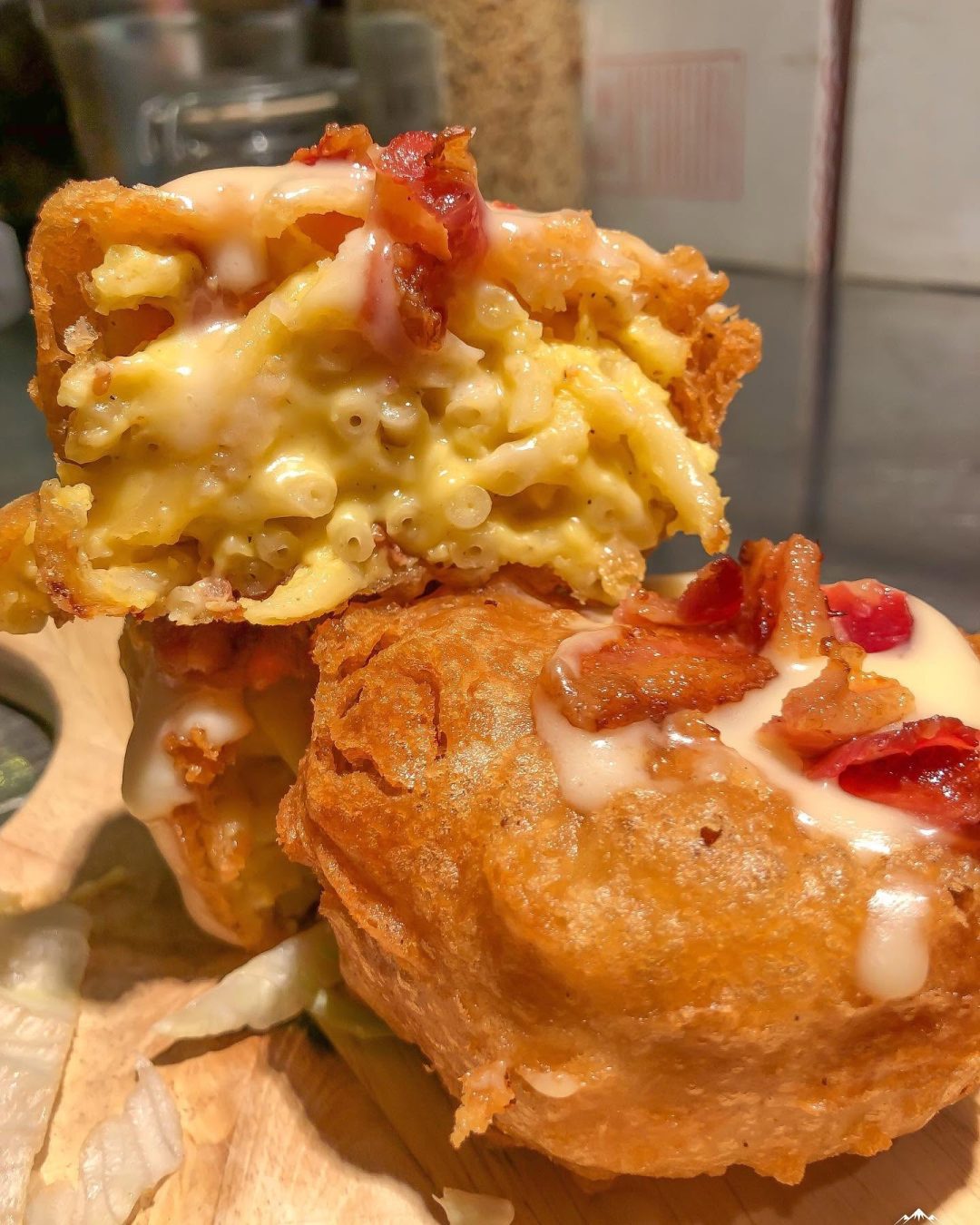
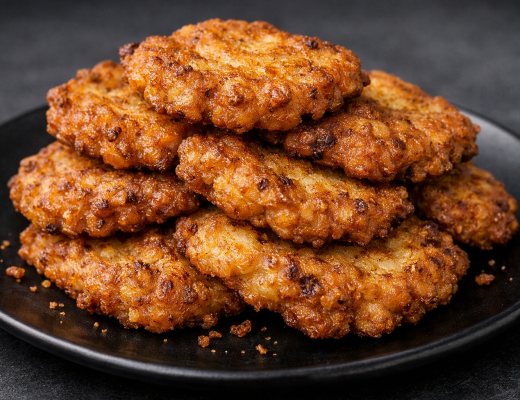
Crispy and golden on the outside, rich and incredibly creamy on the inside, Frittatine alla Carbonara combine two irresistible Italian favorites: traditional Neapolitan pasta fritters and the unmistakable flavors of Roman carbonara.
Bucatini are mixed with crispy guanciale, Pecorino Romano, smoked provola, creamy béchamel, eggs, and plenty of black pepper.
Once chilled and shaped, the pasta fritters are dipped in a simple flour-and-water batter and fried until beautifully crisp.
The result is pure Italian street-food indulgence: crunchy outside, creamy and cheesy inside, with little bites of crispy guanciale throughout.
What Are Frittatine alla Carbonara?
Traditional Neapolitan frittatine di pasta are one of Naples’ most popular fried street foods.
They are usually made with pasta, béchamel, cheese, and other fillings, then shaped into thick rounds, battered, and deep-fried.
This version takes inspiration from pasta alla carbonara, adding guanciale, Pecorino Romano, eggs, black pepper, and smoked provola.
They’re perfect as an appetizer, party food, or part of an Italian-style fried appetizer platter.
DOWNLOAD PDF OF THIS RECIPE HERE:
Cooking Times & Servings
Prep Time: 35 minutes
Chill Time: 5–6 hours
Cook Time: about 20–25 minutes
Total Time: about 6 hours
Servings: 8–10
Yield: approximately 16–20 medium frittatine
Ingredients
For the Pasta Filling
- 1 lb 2 oz (500 g) bucatini
- 5.3 oz (150 g) smoked provola, finely diced
- 14 oz (400 g) guanciale, cut into small strips or cubes
- Freshly ground black pepper, to taste
For the Béchamel
- 7 tablespoons (100 g) unsalted butter
- ¾ cup + 1 tablespoon (100 g) all-purpose flour
- 4¼ cups (1 liter) whole milk
- Fine sea salt, to taste
- Freshly ground black pepper, to taste
- Pinch of ground nutmeg
For the Carbonara Cream
- 1¼ cups (10.5 oz/300 g) pasteurized egg yolks
OR - 10 large whole eggs
- 1½ cups (5.3 oz/150 g) finely grated Pecorino Romano
- Generous amount of freshly ground black pepper
For the Batter
- 2 cups + 2 tablespoons (500 ml) cold water
- About 2¾ cups + 2 tablespoons (350 g) all-purpose flour
- ½ teaspoon fine sea salt, or to taste
- Freshly ground black pepper, to taste
For best results, weigh the flour. Flour volume can vary considerably depending on how it is measured.
For Frying
- Peanut, sunflower, canola, or other neutral frying oil, as needed
Instructions
1. Prepare the Béchamel
Melt the butter in a large saucepan over low to medium-low heat.
Add the flour and whisk continuously until completely smooth. Cook the roux for about 1 minute without allowing it to brown.
Gradually pour in the milk while whisking constantly to prevent lumps.
Continue cooking over medium heat, whisking frequently, until the béchamel becomes thick and creamy.
Season lightly with salt, black pepper, and a pinch of nutmeg.
Remove from the heat and let cool slightly.
The béchamel should be noticeably thicker than a typical pasta sauce because it needs to help bind the frittatine.
2. Cook the Guanciale
Place the guanciale in a cold skillet without adding oil.
Cook over medium-low heat until the fat slowly renders and the guanciale becomes golden and crisp.
Turn off the heat.
Do not discard the rendered guanciale fat. It adds an enormous amount of flavor to the filling.
3. Prepare the Carbonara Cream
In a large bowl, whisk the pasteurized egg yolks—or whole eggs—with the finely grated Pecorino Romano.
Add plenty of freshly ground black pepper.
Whisk until thick, creamy, and completely combined.
Set aside.
4. Cook the Bucatini
Bring a large pot of lightly salted water to a boil.
For easier shaping later, you can break the bucatini into 3 or 4 shorter pieces before cooking.
Cook until very al dente, about 2 minutes less than the package directions.
Drain thoroughly.
Let the pasta stand for about 2 minutes so it is still hot but no longer aggressively steaming.
5. Combine the Filling
Transfer the bucatini to a very large mixing bowl.
Add the smoked provola and crispy guanciale together with its rendered fat.
Add the warm béchamel and toss thoroughly.
Finally, add the carbonara cream while stirring continuously so the egg mixture coats the pasta evenly without forming scrambled eggs.
Mix until the pasta and fillings form one creamy, cohesive mixture.
Taste before adding additional salt. Guanciale and Pecorino Romano are already quite salty.
6. Chill the Pasta Mixture
Line a deep 9 × 13-inch baking dish with parchment paper.
Transfer the pasta mixture to the dish and press it down firmly into an even, compact layer.
Cover and refrigerate for at least 4 hours, preferably until completely cold and firm.
This step is essential. If the mixture is too warm or soft, the frittatine will fall apart during shaping and frying.
7. Shape the Frittatine
Remove the chilled pasta mixture from the refrigerator.
Using a 2½- to 3-inch round cutter, cut the mixture into thick rounds.
Gently compact each round with your hands if necessary.
Place the shaped frittatine on a parchment-lined tray and refrigerate for another 45–60 minutes.
8. Prepare the Batter
Whisk together the cold water, flour, salt, and black pepper until smooth and thick enough to coat the frittatine.
The batter should cling to the pasta rather than immediately running off.
Refrigerate the batter for at least 30–60 minutes before frying.
Whisk again just before using.
9. Fry
Pour enough oil into a deep, heavy-bottomed pot to allow the frittatine to float freely.
Heat the oil to 350°F (175–180°C).
Dip one chilled frittatina completely into the batter. Allow the excess batter to drip off for a few seconds.
Carefully lower it into the hot oil.
Fry only a few pieces at a time for approximately 3–4 minutes, turning as necessary, until deeply golden and crisp.
Do not overcrowd the pot, or the oil temperature will drop and the frittatine may become greasy.
Transfer to a wire rack or paper towel-lined tray.
Allow them to rest for 2–3 minutes before serving.
Serve hot and crispy.
Nonna’s Tips
Keep everything cold before frying.
Well-chilled frittatine are much easier to handle and are less likely to break apart in the oil.
Cook the pasta very al dente.
The pasta continues to soften in the filling and again during frying.
Don’t throw away the guanciale fat.
It carries much of the characteristic carbonara flavor.
Add the egg mixture last.
Letting the pasta cool very slightly and adding the carbonara cream last helps prevent the eggs from scrambling.
Watch the salt.
Both guanciale and Pecorino Romano are naturally salty. Season the béchamel and pasta water conservatively.
Use a thermometer when frying.
Keeping the oil close to 350°F produces a crisp exterior without excessive oil absorption.
Weigh the batter flour if possible.
For this recipe, 350 g of flour is much more reliable than measuring by cups.
Can I Make Frittatine alla Carbonara Ahead of Time?
Absolutely.
Prepare and shape the frittatine up to 1 day ahead, cover them tightly, and keep refrigerated.
Prepare the batter separately and refrigerate it.
Batter and fry the frittatine shortly before serving for the best texture.
Can They Be Frozen?
Yes.
Arrange the shaped, unbattered frittatine on a parchment-lined tray and freeze until solid. Transfer them to an airtight freezer container or freezer bag.
For best results, thaw them overnight in the refrigerator before battering and frying.
What to Serve with Frittatine alla Carbonara
These crispy pasta fritters are rich enough to be served on their own, but they’re fantastic as part of an Italian appetizer spread with:
- fried zucchini
- arancini
- crocchè di patate
- fried eggplant
- marinated vegetables
- olives
- a simple tomato and basil salad
Nutritional Facts
Estimated nutrition per 1 medium frittatina, assuming approximately 20 pieces. Actual values vary considerably depending on size, ingredients, and oil absorption during frying.
| Nutrient | Approximate Amount |
|---|---|
| Calories | 500–520 kcal |
| Carbohydrates | 37–39 g |
| Protein | 17–19 g |
| Total Fat | 32–34 g |
| Saturated Fat | 12–14 g |
| Cholesterol | 125–140 mg |
| Sodium | 500–700 mg |
| Fiber | 1–2 g |
| Sugar | 3–4 g |


1 Comment
BRAYDEN STOCH
2026-09-19 at 6:47 amThis is a great recipe carbonara fritters.