
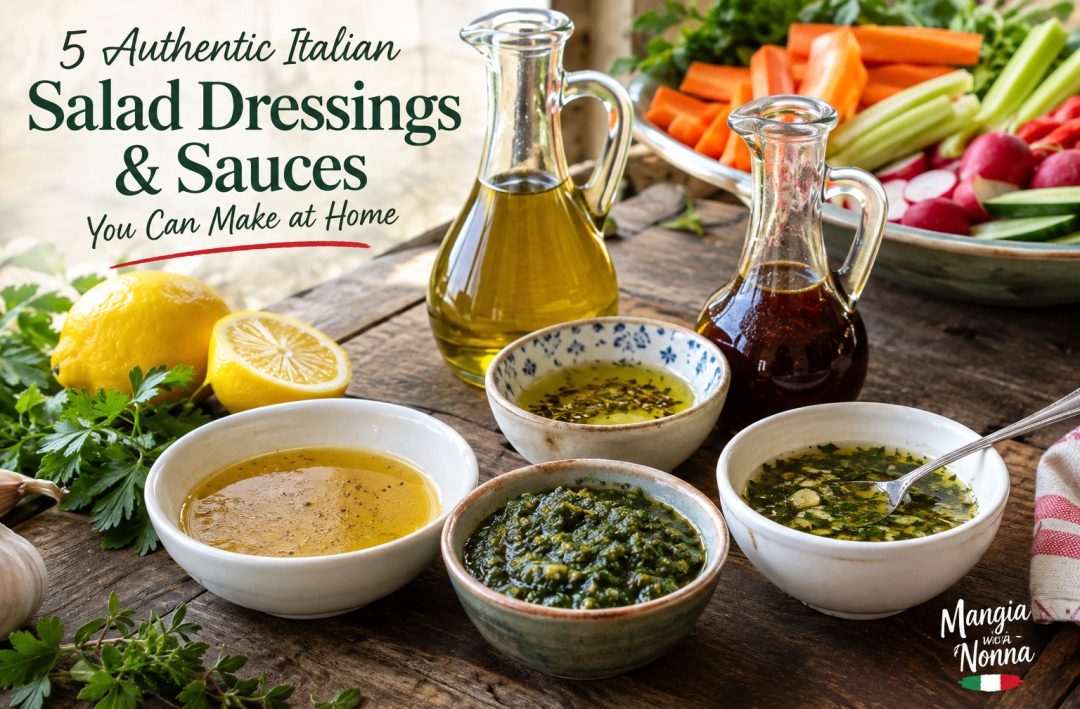
If you’ve ever ordered a salad in Italy, you may have noticed something surprising: there’s usually no bottle of Italian dressing on the table.
Instead, you’ll often find a bottle of good extra virgin olive oil, some wine vinegar, and perhaps a lemon.
That’s because Italians have a wonderfully simple approach to dressing their salads. Rather than covering fresh ingredients with complicated sauces, they prefer to enhance their natural flavors.
But Italy’s tradition of dressings goes far beyond olive oil and vinegar.
From the bright, citrusy flavors of southern Italy to the herb-packed salsa verde of Piedmont, every region has its own delicious way of bringing vegetables, meat, and seafood to life.
Today, we’re exploring five authentic Italian dressings and sauces that deserve a place in your kitchen. They’re easy to prepare, made with everyday ingredients, and full of genuine Italian flavor.
PRINT OR DOWNLOAD PDF WITH THESE RECIPE HERE:
5_Authentic_Italian_Dressings_Recipes
What Is the Difference Between American Italian Dressing and Authentic Italian Dressing?
In the United States, Italian dressing usually refers to a bottled vinaigrette made with oil, vinegar, dried herbs, garlic powder, onion powder, and sometimes sugar or other additives.
Although delicious in its own way, this American-style dressing isn’t a single traditional recipe you’ll find throughout Italy.
In Italian homes, salad dressings are generally much simpler. Extra virgin olive oil is the star, complemented by vinegar, fresh lemon juice, salt, and occasionally aromatic herbs.
Other regional preparations, such as salsa verde and salmoriglio, are used as sauces for meat, seafood, and vegetables rather than everyday salad dressings.
Here are five traditional Italian favorites worth making from scratch.
1. Authentic Italian Lemon Dressing (Citronette)
A Little Taste of Southern Italy
Imagine a summer lunch overlooking the Mediterranean Sea. A bowl of crisp lettuce, freshly sliced tomatoes, and a simple dressing made with golden olive oil and fresh lemon juice.
That’s the beauty of Italian citronette.
Unlike heavy bottled dressings, this bright, refreshing combination takes just minutes to prepare and allows fresh ingredients to shine.
Recipe Information
- Preparation Time: 5 minutes
- Cooking Time: 0 minutes
- Total Time: 5 minutes
- Servings: 6 (about 2 tablespoons each)
- Cuisine: Italian
Ingredients
- 1/3 cup (80 ml) extra virgin olive oil
- 3 tablespoons (45 ml) freshly squeezed lemon juice
- 1/4 teaspoon fine sea salt, or to taste
- 1/8 teaspoon freshly ground black pepper
Instructions
Step 1 – Squeeze the Lemon
Cut a fresh lemon in half and squeeze out 3 tablespoons of juice.
Remove any seeds and strain the juice if you prefer a smoother dressing.
Step 2 – Combine the Ingredients
Pour the lemon juice into a small bowl.
Add the salt and freshly ground black pepper, stirring until the salt dissolves.
Step 3 – Add the Olive Oil
Slowly pour in the extra virgin olive oil while whisking continuously.
Continue until the dressing becomes slightly thickened and emulsified.
Step 4 – Serve Immediately
Drizzle over your favorite salad, steamed vegetables, grilled fish, or seafood.
Whisk again before serving if the oil and lemon juice begin to separate.
Nonna’s Tips
- Use freshly squeezed lemon juice rather than bottled juice.
- Choose a good-quality extra virgin olive oil with a balanced flavor.
- For a gentler lemon flavor, reduce the lemon juice to 2 tablespoons.
- Prepare just before serving for the freshest flavor.
Best Served With: Green salads, grilled fish, shrimp, asparagus, and steamed vegetables.
2. Classic Italian Oil and Vinegar Dressing (Vinaigrette)
The Dressing Found on Italian Family Tables
Sometimes the most memorable flavors come from the simplest ingredients.
In countless Italian homes, a fresh salad is dressed directly at the table with extra virgin olive oil, wine vinegar, and a pinch of salt.
There’s no need for a store-bought bottle or a complicated recipe.
This classic combination is an everyday part of Italian home cooking, especially when served alongside roasted meats, pasta dishes, and Sunday family lunches.
Recipe Information
- Preparation Time: 5 minutes
- Cooking Time: 0 minutes
- Total Time: 5 minutes
- Servings: 6 (about 2 tablespoons each)
- Cuisine: Italian
Ingredients
- 1/3 cup (80 ml) extra virgin olive oil
- 3 tablespoons (45 ml) red wine vinegar or white wine vinegar
- 1/4 teaspoon fine sea salt, or to taste
- 1/8 teaspoon freshly ground black pepper (optional)
Instructions
Step 1 – Choose Your Vinegar
Select a good-quality red or white wine vinegar.
Red wine vinegar offers a more robust flavor, while white wine vinegar is usually a little lighter.
Step 2 – Dissolve the Salt
Pour the vinegar into a small bowl and add the salt.
Stir until dissolved.
Step 3 – Add the Olive Oil
Gradually whisk in the extra virgin olive oil until the ingredients combine.
Add black pepper if desired.
Step 4 – Dress Your Salad
Pour the vinaigrette over freshly washed and thoroughly dried salad greens.
Toss gently and serve immediately.
Nonna’s Tips
- In Italy, many families simply add the vinegar, salt, and oil directly to their salad rather than mixing them separately.
- Start with less vinegar if you prefer a milder dressing.
- Avoid drowning the vegetables in dressing. A little goes a long way.
- For the most traditional everyday flavor, use wine vinegar rather than sweetened bottled dressings.
Best Served With: Mixed green salads, tomatoes, cucumbers, radicchio, and grilled vegetables.
3. Authentic Italian Salsa Verde (Traditional Green Sauce)
A Classic from Northern Italy
When Italians talk about salsa verde, they aren’t referring to the Mexican sauce made with tomatillos.
Traditional Italian salsa verde is a fragrant parsley-based sauce with deep roots in northern Italian cooking, particularly in Piedmont.
It’s famously served with bollito misto, a traditional dish of assorted boiled meats, but it’s equally wonderful with roasted vegetables, eggs, fish, and potatoes.
The combination of parsley, capers, anchovies, and olive oil creates a bold, savory sauce that transforms even the simplest meal.
Recipe Information
- Preparation Time: 15 minutes
- Cooking Time: 0 minutes
- Total Time: 15 minutes
- Servings: 8 (about 2 tablespoons each)
- Cuisine: Piedmontese, Northern Italian
Ingredients
- 2 packed cups (about 60 g) fresh flat-leaf parsley leaves
- 1/3 cup (80 ml) extra virgin olive oil, plus more if needed
- 2 tablespoons (30 ml) red wine vinegar
- 2 tablespoons (about 20 g) capers, drained
- 3 anchovy fillets in oil, drained
- 1 small garlic clove
- 1 slice (about 30 g) day-old Italian bread, crust removed
- 2 tablespoons (30 ml) water, as needed
- Freshly ground black pepper, to taste
- Salt, only if needed
Instructions
Step 1 – Prepare the Bread
Tear the bread into small pieces and soak it briefly in the red wine vinegar.
If necessary, add a little water to soften it.
Squeeze out any excess liquid, keeping the moistened bread.
Step 2 – Prepare the Herbs
Wash the parsley thoroughly and dry it well.
Remove any particularly tough stems.
Finely chop the parsley, garlic, capers, and anchovy fillets.
Step 3 – Combine the Ingredients
Transfer everything to a bowl.
Add the softened bread and mix until evenly distributed.
For a finer texture, briefly pulse the ingredients in a food processor without turning them into a completely smooth puree.
Step 4 – Add the Olive Oil
Gradually stir in the extra virgin olive oil until the mixture becomes a thick, spoonable sauce.
Add a little extra oil if necessary.
Step 5 – Adjust and Serve
Season with black pepper and taste before adding salt, as the anchovies and capers are already salty.
Let the salsa verde rest for 15–20 minutes in the refrigerator before serving to allow the flavors to blend.
Nonna’s Tips
- Flat-leaf Italian parsley provides the best flavor.
- Rinse salted capers thoroughly before using.
- Avoid blending the sauce excessively; a slightly rustic texture is traditional.
- Some Piedmontese versions include hard-boiled egg yolks, while other regional variations omit the bread.
Best Served With: Bollito misto, boiled potatoes, roasted meats, hard-boiled eggs, and grilled fish.
4. Traditional Italian Salmoriglio Sauce (Lemon, Olive Oil & Oregano)
Sicily’s Wonderful Secret for Grilled Food
In Sicily and Calabria, some of the most delicious meals begin with fresh seafood, a hot grill, and a small bowl of salmoriglio.
Known regionally by names such as sammurigghiu, this aromatic sauce brings together olive oil, lemon, oregano, and garlic.
Traditionally spooned over grilled swordfish and other seafood, it also makes a fantastic finishing sauce for chicken, meat, and vegetables.
Its irresistible fragrance comes from the combination of citrus, herbs, and warm grilled food.
Recipe Information
- Preparation Time: 10 minutes
- Cooking Time: 0 minutes
- Total Time: 10 minutes
- Servings: 8 (about 2 tablespoons each)
- Cuisine: Sicilian, Calabrian, Southern Italian
Ingredients
- 1/2 cup (120 ml) extra virgin olive oil
- 3 tablespoons (45 ml) freshly squeezed lemon juice
- 2 tablespoons (30 ml) warm water
- 1 teaspoon dried oregano
- 1 small garlic clove, finely minced
- 1 tablespoon finely chopped fresh parsley (optional)
- 1/4 teaspoon fine sea salt, or to taste
- Freshly ground black pepper, to taste
Instructions
Step 1 – Prepare the Garlic
Peel the garlic clove and mince it very finely.
For a milder flavor, lightly crush the clove and remove it before serving.
Step 2 – Mix the Lemon and Seasonings
In a small bowl, combine the lemon juice, warm water, salt, black pepper, and oregano.
Stir well.
Step 3 – Add the Olive Oil
Slowly pour in the extra virgin olive oil, whisking constantly.
Continue until the mixture becomes slightly creamy and emulsified.
Step 4 – Add the Aromatics
Stir in the garlic and parsley, if using.
Allow the sauce to rest for approximately 5 minutes so the oregano can release its aroma.
Step 5 – Serve
Spoon the salmoriglio over freshly grilled fish, seafood, chicken, or vegetables.
Serve at room temperature, whisking again just before use.
Nonna’s Tips
- Dried oregano is especially traditional in southern Italian cooking.
- Never boil the sauce; excessive heat can dull the fresh lemon flavor.
- For grilled swordfish, brush a little salmoriglio over the fish immediately after cooking.
- Adjust the garlic according to personal preference.
Best Served With: Grilled swordfish, sea bass, shrimp, chicken, eggplant, and zucchini.
5. Authentic Italian Pinzimonio (Extra Virgin Olive Oil Dip)
The Simplest Italian Appetizer
Picture a rustic Italian table covered with fresh vegetables: crisp celery, sweet carrots, fennel, radishes, and colorful bell peppers.
In the center sits a small bowl of golden extra virgin olive oil seasoned with salt and freshly ground black pepper.
This is pinzimonio, one of Italy’s simplest and most enjoyable ways to celebrate fresh, seasonal vegetables.
Rather than a thick dip, pinzimonio is a delicate olive oil mixture that allows the flavor of each vegetable to shine.
It’s especially popular as an appetizer or a fresh accompaniment to a leisurely meal.
Recipe Information
- Preparation Time: 15 minutes
- Cooking Time: 0 minutes
- Total Time: 15 minutes
- Servings: 6
- Cuisine: Italian
Ingredients
For the Pinzimonio Dressing
- 1/3 cup (80 ml) extra virgin olive oil
- 1/4 teaspoon fine sea salt, or to taste
- 1/8 teaspoon freshly ground black pepper
- 1 tablespoon (15 ml) freshly squeezed lemon juice or wine vinegar (optional)
For the Fresh Vegetables
- 2 medium carrots, peeled and cut into sticks
- 2 celery stalks, cut into sticks
- 1 small fennel bulb, trimmed and sliced
- 1 red bell pepper, sliced into strips
- 6 radishes, washed and trimmed
- 1 small cucumber, cut into sticks
Instructions
Step 1 – Wash the Vegetables
Rinse all vegetables thoroughly under cold running water.
Dry them with a clean kitchen towel.
Step 2 – Cut into Serving Pieces
Slice the carrots, celery, cucumber, and bell pepper into easy-to-hold sticks.
Cut the fennel into thin wedges and leave the radishes whole or halve larger ones.
Step 3 – Prepare the Olive Oil Dip
Pour the extra virgin olive oil into a small serving bowl.
Add the salt and black pepper.
If desired, stir in a little fresh lemon juice or wine vinegar.
Step 4 – Arrange the Platter
Place the vegetables on a large serving platter, grouping them by type for an attractive presentation.
Step 5 – Serve
Set the bowl of seasoned olive oil in the center.
Invite everyone to dip the vegetables directly into the dressing.
For easier sharing, provide individual small bowls of oil.
Nonna’s Tips
- Freshness is everything. Choose crisp, seasonal vegetables.
- Use the best extra virgin olive oil you can find.
- Traditional pinzimonio often includes fennel, celery, carrots, and radishes, but the selection can vary with the season.
- Serve the vegetables chilled and the olive oil at room temperature.
Best Served With: Fresh vegetable platters, antipasto spreads, and traditional Italian family meals.
Which Italian Dressing Should You Choose?
Each of these five recipes offers a different expression of Italian cooking.
- Citronette: Best for salads, seafood, and dishes that benefit from fresh lemon.
- Classic Oil and Vinegar Dressing: Ideal for everyday green salads and tomatoes.
- Salsa Verde: Perfect for boiled meats, roasted potatoes, eggs, and fish.
- Salmoriglio: An excellent finishing sauce for grilled seafood, chicken, and vegetables.
- Pinzimonio: The traditional choice for dipping fresh, crunchy vegetables.
How to Store Homemade Italian Dressings
Because these recipes contain different ingredients, storage times vary.
Citronette and classic vinaigrette are best prepared fresh but can be refrigerated in clean, covered containers for up to 3 days.
Salmoriglio is best enjoyed freshly made. If necessary, refrigerate it promptly and use within 1–2 days.
Fresh salsa verde should be stored in an airtight container in the refrigerator and used within 1–2 days.
Pinzimonio oil is best prepared just before serving. Refrigerate any cut vegetables separately.
Always refrigerate preparations containing fresh garlic, fresh herbs, or other perishable ingredients. Never store homemade garlic-infused oil at room temperature.
Remove olive-oil-based dressings from the refrigerator shortly before serving, if needed, and whisk again.
Frequently Asked Questions
Is Italian dressing actually Italian?
The bottled Italian dressing commonly sold in American supermarkets is an Italian-American preparation rather than a single traditional Italian recipe. Italian home cooking uses a variety of simpler dressings and regional sauces.
What do Italians put on their salads?
Most commonly, extra virgin olive oil, wine vinegar or lemon juice, and salt. Some people also add freshly ground black pepper.
Do Italians use balsamic vinegar on salads?
Yes. Balsamic vinegar is used on certain salads and other dishes, particularly in and beyond its home region of Emilia-Romagna. However, it isn’t the universal dressing for every Italian salad.
Can I use these dressings for pasta salad?
Citronette and classic vinaigrette work particularly well with cold pasta salads. Salsa verde and salmoriglio can also be used in smaller quantities to give pasta dishes additional flavor.
Are these Italian dressings healthy?
These homemade dressings use familiar ingredients and allow you to control the amount of salt and added ingredients. Extra virgin olive oil provides predominantly unsaturated fats, although it is also calorie-dense.
A Final Taste of Italy
Italian cooking has never been about hiding ingredients beneath complicated sauces.
It’s about making a few carefully chosen ingredients taste extraordinary.
Whether you’re dressing a simple green salad, preparing grilled swordfish, or serving fresh vegetables before Sunday dinner, these five traditional Italian recipes bring a little piece of Italy to your table.
Sometimes, all you need is good olive oil, a squeeze of lemon, and the pleasure of sharing something delicious with the people you love.
Buon appetito!


No Comments