
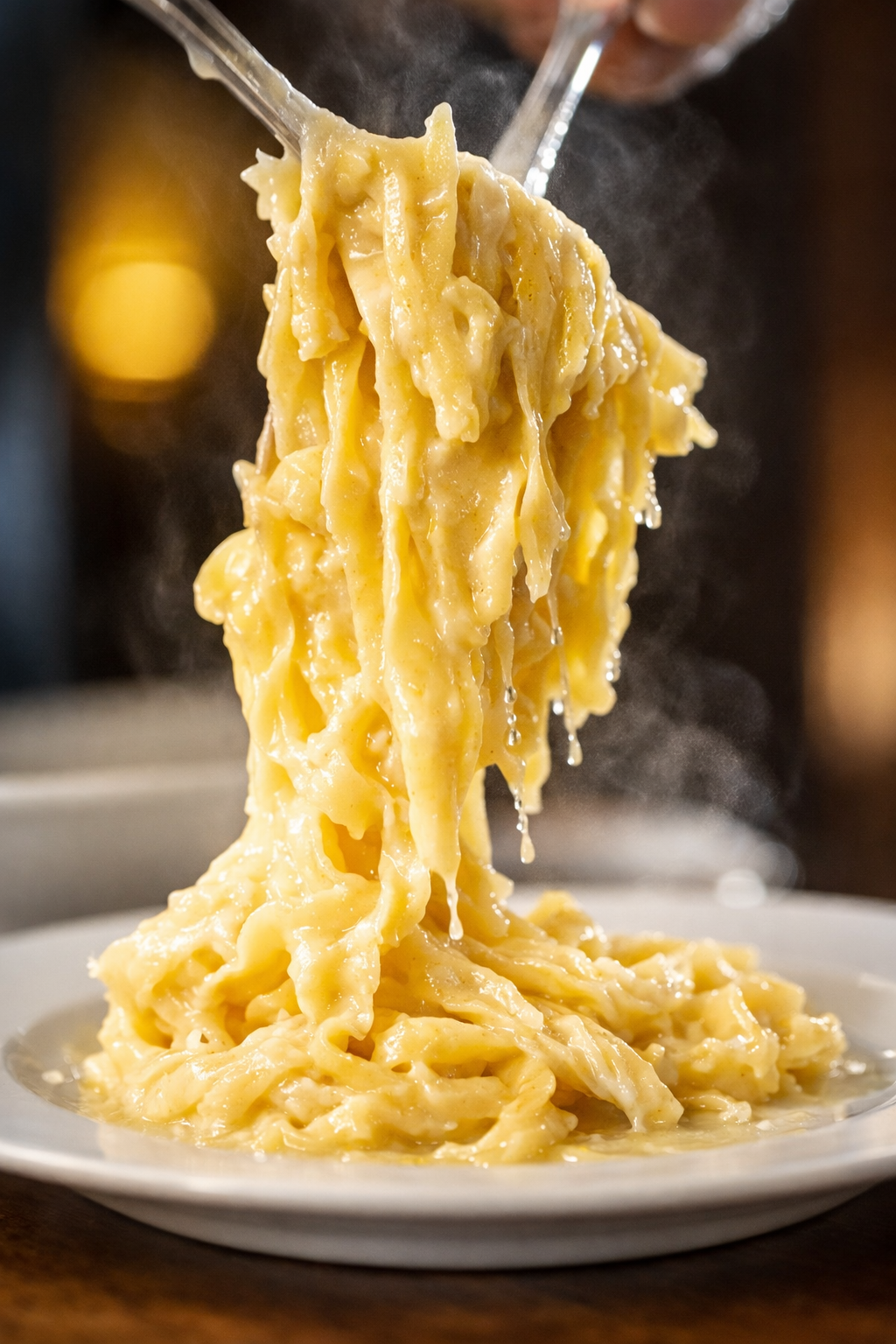
Fettuccine Alfredo: Rome’s “Italian-American” Legend in Three Ingredients
Fettuccine Alfredo is one of those rare dishes that feels ancient and “typically Italian”… yet Italians don’t really cook it at home, and you won’t find it as a daily staple across Italy.
And that’s exactly what makes it fascinating.
Born in Rome in the early 1900s, Fettuccine Alfredo is credited to Alfredo di Lelio, who served a simple plate of fresh fettuccine tossed with butter and Parmigiano Reggiano at his restaurant.
The dish became famous not because it was complicated, but because it was pure comfort—rich, silky, and soothing, created through the Roman technique of mantecatura (tossing hot pasta with fat + cheese + a little pasta water until it turns into a creamy emulsion).
How It Became Famous Abroad (and “Not Typical” in Italy)
Here’s the twist: Fettuccine Alfredo became a global icon largely thanks to American visitors who fell in love with it and brought the idea back home—where it evolved into the creamy, heavy “Alfredo sauce” versions most people recognize today.
In Italy, however, you’re far more likely to see pasta dressed with cacio e pepe, burro e salvia, or carbonara than something explicitly called “Alfredo.”
So while the dish was born in Rome, its myth grew overseas—turning a restaurant specialty into an Italian-American superstar.
The Real “Alchemy” Is the Technique
Authentic Alfredo isn’t about adding ingredients.
It’s about mastering the moment when hot pasta, room-temperature butter, finely grated Parmigiano Reggiano, and starchy pasta water transform into a glossy sauce that coats every strand.
No cream. No garlic. No chicken.
Just a simple Roman ritual that proves the Italian rule: when ingredients are few, technique becomes everything.
DOWNLOAD PDF WITH FETTUCCINE ALFREDO RECIPE HERE:
Cooking Times and Servings
Prep Time: 10 minutes
Cook Time: 5 minutes
Total Time: 15 minutes
Servings: 4
Ingredients
Fresh egg fettuccine: 14 oz (400 g)
Unsalted butter (high-quality): 5.6 oz (160 g), room temperature, cut into small pieces
Parmigiano Reggiano (24 months+): 7 oz (200 g), freshly grated (very fine)
Salt: for pasta water
Instructions
1) Boil the water
Bring a large pot of water to a rolling boil and salt it well (about 1 Tbsp salt per 1 gallon of water).
2) Cook the fettuccine
Add the fresh fettuccine and cook 2–3 minutes, just until al dente. Fresh pasta moves fast—don’t walk away.
3) Warm your mixing bowl
While the pasta cooks, place the butter in a large warmed serving bowl (or a wide pan).
Tip: Warm the bowl with hot water for 30 seconds, then dry it.
4) Transfer pasta (don’t drain it bone-dry)
Use tongs to move the pasta straight into the bowl with the butter. Let some pasta water come with it—this is key.
5) Mantecatura (the magic step)
Add the Parmigiano Reggiano and toss vigorously with tongs (or two wooden spoons).
If it looks tight or clumpy, add 1–2 Tbsp hot pasta water at a time, tossing constantly, until the sauce turns silky and glossy.
6) Serve immediately
Plate right away—no garnish, no pepper, no cream. Just pure, golden Roman perfection.
Tips and Tricks (from the “mantecatore” mindset)
Grate the cheese very fine (microplane-style). Coarser shreds can turn grainy.
Butter must be room temperature so it melts gently and emulsifies smoothly.
Pasta water is the secret ingredient (even though it’s not “an ingredient”): starch + heat = sauce.
Work fast: Alfredo is at its best within minutes of tossing—it doesn’t like waiting.
Nutritional Facts (Estimated, per serving)
Calories: ~760
Carbohydrates: ~56 g
Protein: ~28 g
Fat: ~48 g
Saturated Fat: ~29 g
Fiber: ~2 g
Sugar: ~2 g
Sodium: varies (depends on salt used in pasta water)
(Estimates can vary based on pasta brand/egg content and exact butter/cheese used.)
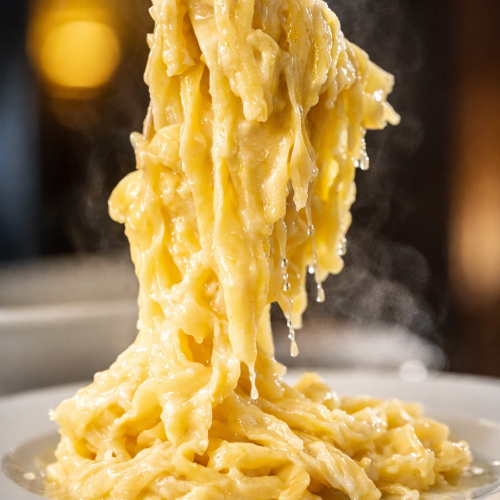
FETTUCCINE ALFREDO: THE REAL RECIPE
Notes
Ingredients
- Fresh egg fettuccine: 14 oz (400 g)
- Unsalted butter (high-quality): 5.6 oz (160 g), room temperature, cut into small pieces
- Parmigiano Reggiano (24 months+): 7 oz (200 g), freshly grated (very fine)
- Salt: for pasta water
Instructions
1) Boil the water
Bring a large pot of water to a rolling boil and salt it well (about 1 Tbsp salt per 1 gallon of water).2) Cook the fettuccine
Add the fresh fettuccine and cook 2–3 minutes, just until al dente. Fresh pasta moves fast—don’t walk away.3) Warm your mixing bowl
While the pasta cooks, place the butter in a large warmed serving bowl (or a wide pan).Tip: Warm the bowl with hot water for 30 seconds, then dry it.
4) Transfer pasta (don’t drain it bone-dry)
Use tongs to move the pasta straight into the bowl with the butter. Let some pasta water come with it—this is key.5) Mantecatura (the magic step)
Add the Parmigiano Reggiano and toss vigorously with tongs (or two wooden spoons).If it looks tight or clumpy, add 1–2 Tbsp hot pasta water at a time, tossing constantly, until the sauce turns silky and glossy.
6) Serve immediately
Plate right away—no garnish, no pepper, no cream. Just pure, golden Roman perfection.


No Comments