
The Italian culinary tradition is renowned for its emphasis on quality ingredients, and flour plays a central role in the creation of its iconic baked goods such as cakes, pizzas, and breads.
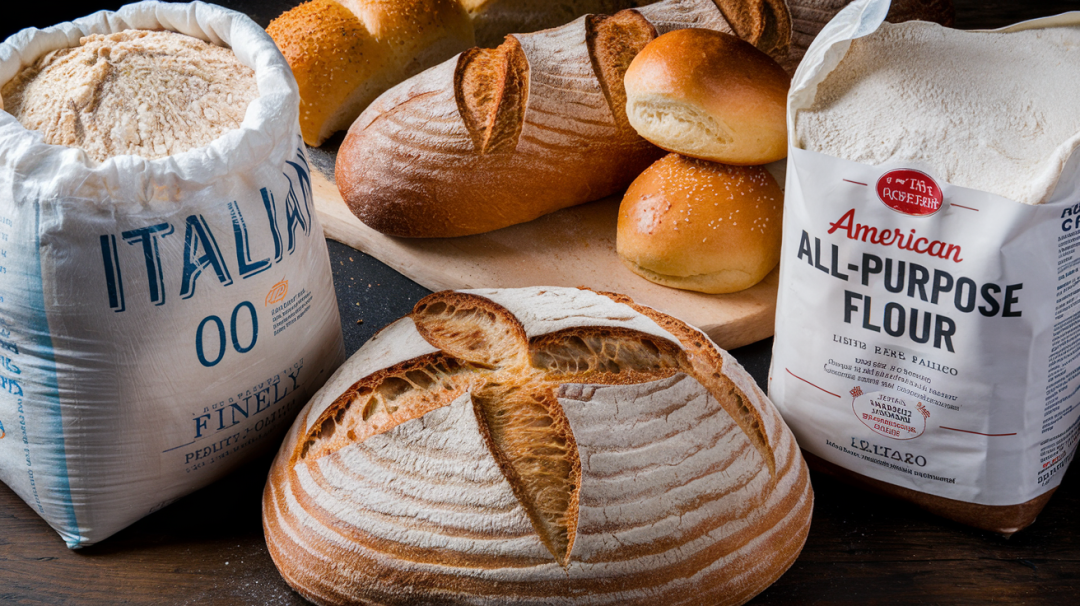
Italian flours are classified differently from American flours, which often leads to confusion when trying to recreate authentic Italian recipes at home.
This guide will explore the types of Italian flours, their characteristics, and their closest American equivalents.
Classification of Italian flours
Italian flours are classified according to the fineness of their milling and their ash content (the amount of mineral residue left after burning a sample).
The lower the number, the finer and whiter the flour.
Here is the breakdown:
- “00” flour: very fine, soft and white, perfect for delicate baked goods.
- “0” flour: slightly coarser than “00”, often used for bread and pizza dough.
- “1” and “2” flours: Even coarser, containing more bran and germ, closer to whole wheat.
- Whole Wheat (Integral): Contains all parts of the grain, is rich in fiber, and has an intense flavor.
American flours, on the other hand, are classified according to protein content and intended use, such as whole-wheat flour, bread flour, and pastry flour.
Flours for cakes
Italian flour: Flour “00
- Characteristics: Very fine, low protein (about 8-9%), ideal for soft, tender cakes such as sponge cake or panettone.
- American equivalent: Cake flour
- Cake flour is also finely ground and low in protein, making it a suitable substitute for “00” flour in cakes. If it is not available, a mixture of whole wheat flour and cornstarch can mimic its texture.
Pizza flours
Italian flour: “00” flour for pizza
- Characteristics: Slightly higher in protein (about 11-12%) than “00” for cakes, makes for an elastic dough with a crisp crust.
- U.S. equivalent: Whole wheat flour or bread flour.
- The higher protein content of bread flour (12-13%) makes it ideal for a chewy crust, but whole wheat flour works well for a thinner, less chewy base. Specialty flours such as Caputo “00” pizza flour are also available in the United States.
Italian flour: Manitoba flour
- Characteristics: High-gluten flour often mixed with “00” for Neapolitan-style pizza dough, known for its elasticity.
- American equivalent: bread flour
- The gluten content of bread flour matches that of Manitoba flour, providing the structure needed for long fermentation.
Bread flours
Italian flour: “0” flour
- Characteristics: Slightly coarser milled than “00,” with protein levels around 12-13%, making it versatile for rustic breads and flatbreads.
- American equivalent: Bread flour
- Bread flour matches the protein level and texture, ideal for sturdy breads and flatbreads.
Italian flour: Semola Rimacinata
- Characteristics: Finely ground, yellow durum wheat flour used for breads such as Altamura and to create crispy crusts.
- American equivalent: Fine semolina flour.
- Semolina available in American stores works well, but make sure it is the finely ground variety to get similar results.
Italian flour: whole wheat (Integrale).
- Characteristics: Rich in fiber, with a nutty flavor, perfect for rustic, whole grain breads.
- American equivalent: Whole wheat flour.
- American whole wheat flour is similar in fiber content and taste, although slightly coarser.
Additional notes on substituting Italian flours
- Pay attention to protein content: When substituting flours, check protein levels, as they affect gluten formation and texture. Flours with low protein content produce softer baked goods, while those with higher protein content result in more elastic and chewy doughs.
- Mixing flours: Italians often mix flours for specific recipes, such as mixing “00” with Manitoba for pizza or “0” with whole wheat for rustic breads.
- Hydration Levels: Italian flours can absorb water differently than American flours, so it is a good idea to adjust hydration as needed when making dough.
Tips for authentic Italian baking
- Look for Italian flours: Many specialty stores and online retailers offer authentic Italian flours such as Caputo, Mulino Marino or Antimo Caputo.
- Experiment with recipes: Try mixing flours to get the consistency you want for your baked goods.
- Understand your flour: Each flour behaves differently, so test to perfect hydration, fermentation and baking times.
Conclusion
Understanding the nuances of Italian flours and their American equivalents is critical to achieving authentic textures and flavors in your cakes, pizzas and breads. Whether you’re using “00” for silky cakes, semolina for crisp breads, or mixing flours to achieve pizza perfection, the right flour makes all the difference. With this guide you will be ready to bring the flavor of Italy into your kitchen! 🍞🍕🎂


No Comments