
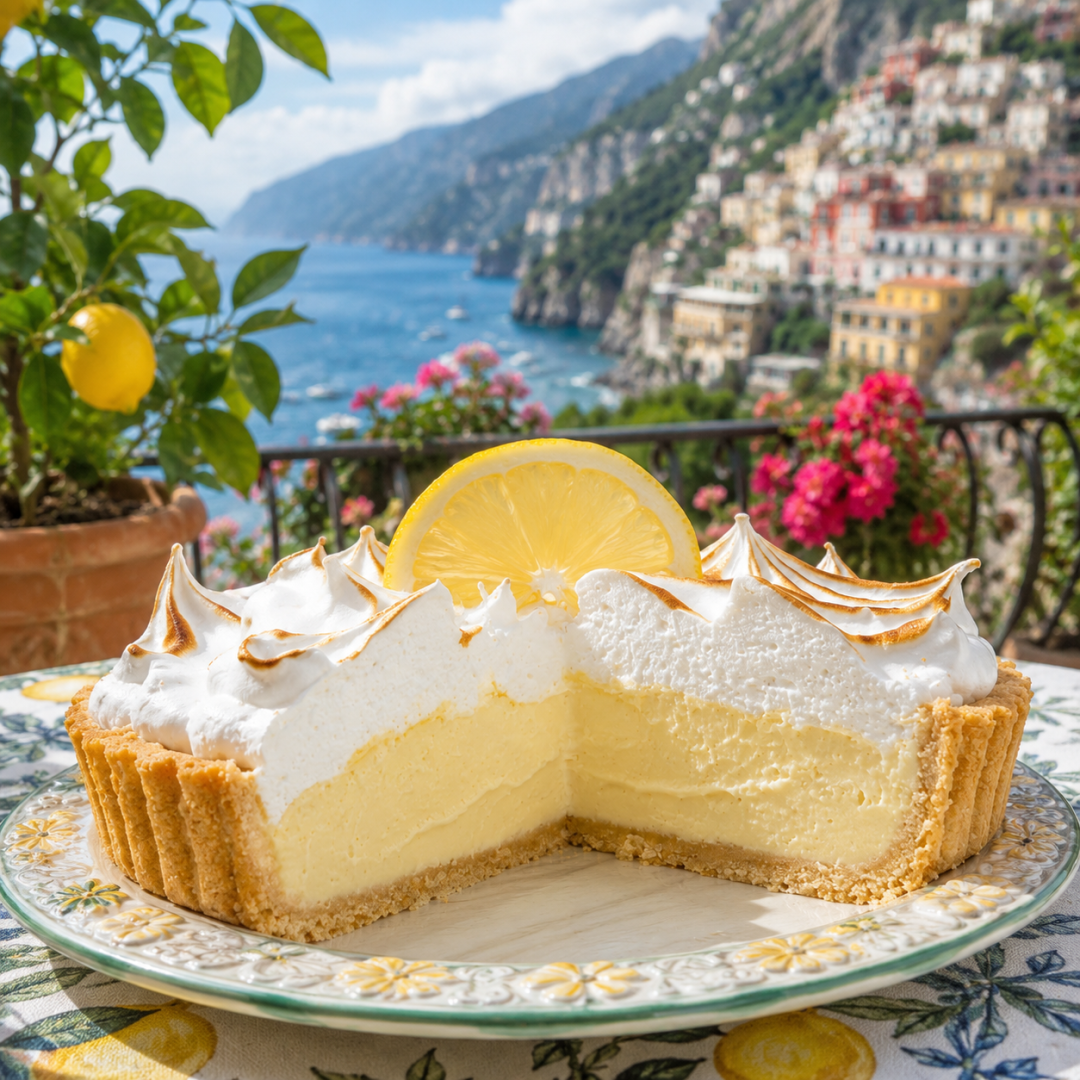
This Lemon Meringue Pie is a beautiful balance of buttery pastry, intensely flavored lemon curd, and soft, glossy Italian meringue.
The crisp shortcrust shell holds a smooth lemon filling made with fresh lemon juice and zest, while the cloud-like meringue topping adds sweetness and an elegant finish. Lightly toasted with a kitchen torch, the meringue develops golden peaks that make this dessert especially impressive.
Although the recipe requires several steps, much of the work can be prepared in advance. For the best results, make the pastry shell and lemon curd one day ahead, then prepare and toast the meringue shortly before serving.
DOWNLOAD PDF OF THIS RECIPE HERE:
Why You’ll Love This Recipe
🍋 Bright, intense lemon flavor
🥧 Crisp and buttery homemade crust
☁️ Soft, glossy Italian meringue
✨ An elegant dessert for special occasions
🕒 Easy to divide into two days
Recipe Details
Difficulty: Medium
Cost: Budget-friendly
Prep Time: 40 minutes
Chilling Time: At least 5 hours
Cook Time: 30 minutes
Total Time: About 6 hours 10 minutes
Servings: 12
Cooking Method: Oven and stovetop
Cuisine: British-inspired
Pan Size: 9½-inch tart pan with removable bottom
Equipment
- 9½-inch tart pan with removable bottom
- Rolling pin
- Parchment paper
- Pie weights, dried beans, or ceramic baking beans
- Fine-mesh strainer or sifter
- Heatproof bowl
- Saucepan
- Electric hand mixer or stand mixer
- Candy or instant-read thermometer
- Piping bag
- Saint-Honoré, star, or round piping tip
- Kitchen torch
Ingredients
For the Shortcrust Pastry
- 1⅔ cups all-purpose flour, spooned and leveled (200 g)
- 7 tablespoons unsalted butter, cold and cut into cubes (100 g)
- ½ cup granulated sugar (100 g)
- 1 large egg
- Finely grated zest of ½ lemon
- 1 pinch salt
For the Lemon Curd
- 3 lemons
- 1 cup granulated sugar (200 g)
- 7 tablespoons unsalted butter, cut into pieces (100 g)
- ¼ cup cornstarch (30 g)
- 3 large eggs
- 1 large egg yolk
For the Italian Meringue
- ½ cup large egg whites, about 4 egg whites (125 g)
- 1 cup granulated sugar, divided (200 g)
- 3 tablespoons plus 1 teaspoon water (50 g)
Instructions
Prepare the Shortcrust Pastry
- Place the flour in a large mixing bowl. Add the cold butter and rub it into the flour with your fingertips until the mixture resembles coarse crumbs.
- Add the sugar, salt, lemon zest, and egg.
- Mix first with a fork, then knead gently by hand until a smooth, uniform dough forms. Avoid overworking the pastry.
- Shape the dough into a flat disk, wrap it in plastic wrap, and refrigerate for 30 minutes.
- The dough can also be prepared in a stand mixer fitted with the paddle attachment or in a food processor. Add the ingredients in the same order and mix only until the dough comes together.
Shape the Tart Shell
- Preheat the oven to 340°F conventional, or 320°F convection.
- Grease and flour a 9½-inch tart pan with a removable bottom.
- Roll the chilled pastry between two lightly floured sheets of parchment paper until it is large enough to line the pan.
- Transfer the dough to the tart pan and press it gently into the bottom and sides.
- Fold any excess dough inward to create slightly thicker, sturdier edges.
- Prick the bottom of the crust all over with a fork.
- Refrigerate the lined tart pan for another 30 minutes. This step helps prevent the pastry from shrinking or losing its shape during baking.
Blind-Bake the Crust
- Cover the chilled pastry with a sheet of parchment paper.
- Fill the shell with pie weights, ceramic baking beans, or dried beans.
- Bake at 340°F for 15 minutes.
- Carefully remove the parchment paper and weights.
- Reduce the oven temperature to 320°F and bake uncovered for another 15 minutes, or until the crust is lightly golden and fully baked.
- Let the tart shell cool completely in the pan.
- Once cool, carefully remove it from the pan and place it on a serving plate.
Prepare the Lemon Curd
- Finely grate the zest from the lemons, avoiding the bitter white pith.
- Squeeze the lemon juice into a bowl. You should have approximately ½ cup to ⅔ cup juice, depending on the size of the lemons.
- Sift the cornstarch into the lemon juice and whisk until completely smooth and free of lumps.
- Place the butter in a heatproof bowl set over a saucepan of gently simmering water. Make sure the bottom of the bowl does not touch the water.
- Melt the butter slowly, stirring occasionally.
- Add the sugar and continue stirring.
- In a separate bowl, lightly beat the eggs and egg yolk with a fork.
- Add the lemon juice and cornstarch mixture, beaten eggs, egg yolk, and lemon zest to the melted butter.
- Continue cooking over the double boiler for approximately 10 minutes, stirring frequently, until the lemon curd thickens enough to coat the back of a spoon.
- Remove the curd from the heat and let it cool slightly at room temperature.
- Pour the warm lemon curd into the cooled pastry shell.
- Smooth the top with an offset spatula.
- Allow the tart to cool, then refrigerate for at least 4 hours or preferably overnight. Cover the surface carefully once the filling has cooled.
Prepare the Italian Meringue
- Place the egg whites in the clean, grease-free bowl of a stand mixer.
- Add 2 tablespoons of the sugar, approximately 25 g.
- Begin whipping the egg whites on low speed.
- Place the water and the remaining sugar, approximately 175 g, in a small saucepan.
- Heat over medium-high heat without stirring.
- When the syrup reaches 244°F, increase the mixer speed to high.
- Continue heating the sugar syrup until it reaches 250°F.
- Immediately remove the saucepan from the heat.
- With the mixer running, carefully pour about half of the hot syrup into the egg whites.
- Slowly pour in the remaining syrup in a thin, steady stream. Aim for the side of the bowl rather than directly onto the beaters.
- Continue whipping for approximately 10 minutes, or until the meringue is thick, glossy, stable, and the mixing bowl has cooled to room temperature.
Assemble the Lemon Meringue Pie
- Transfer the Italian meringue to a piping bag fitted with a Saint-Honoré tip, star tip, or another decorative tip.
- Pipe the meringue over the chilled lemon filling, beginning around the outer edge and working toward the center.
- Create waves, swirls, or raised peaks to give the pie an airy, decorative appearance.
- Lightly toast the meringue with a kitchen torch until the raised areas are golden brown.
- Refrigerate the finished pie until ready to serve.
No-Torch Method
Without a kitchen torch, place the finished pie under the oven broiler for approximately 2 to 3 minutes.
Watch it constantly, because the meringue can brown very quickly. Remove the pie as soon as the raised areas become lightly golden.
The appearance will be slightly different from torching, but the result will still be beautiful.
Tips for the Best Lemon Meringue Pie
Use a Thermometer
The temperature of the sugar syrup is essential when making Italian meringue. The syrup should reach 250°F before it is added to the egg whites.
Chill the Pastry Twice
Chilling the pastry before and after lining the tart pan reduces shrinkage and helps the crust retain its shape.
Do Not Overwork the Dough
Knead the shortcrust pastry only until it comes together. Excessive mixing can make the baked crust tough rather than tender and crumbly.
Cook the Lemon Curd Gently
A double boiler provides gentle, even heat and reduces the risk of scrambling the eggs.
Make the Pie Over Two Days
For easier preparation:
Day One: Prepare and bake the tart shell, make the lemon curd, fill the crust, and refrigerate overnight.
Day Two: Prepare the Italian meringue, decorate the pie, toast the surface, and refrigerate until serving.
Choose Any Piping Tip
A Saint-Honoré tip creates elegant ribbon-like waves, but a large star or round piping tip also works beautifully.
Without a piping bag, spread the meringue over the filling with a spatula and create peaks with the back of a spoon.
Storage
Store Lemon Meringue Pie covered in the refrigerator for up to 3 days.
For the best texture and appearance, serve it within the first 24 to 48 hours.
Freezing is not recommended because the lemon curd and meringue may release moisture and lose their original texture after thawing.
Nutrition Information
Approximate calories per serving: 390 calories
Nutritional values are estimates and may vary depending on the ingredients and portion sizes used.


No Comments