
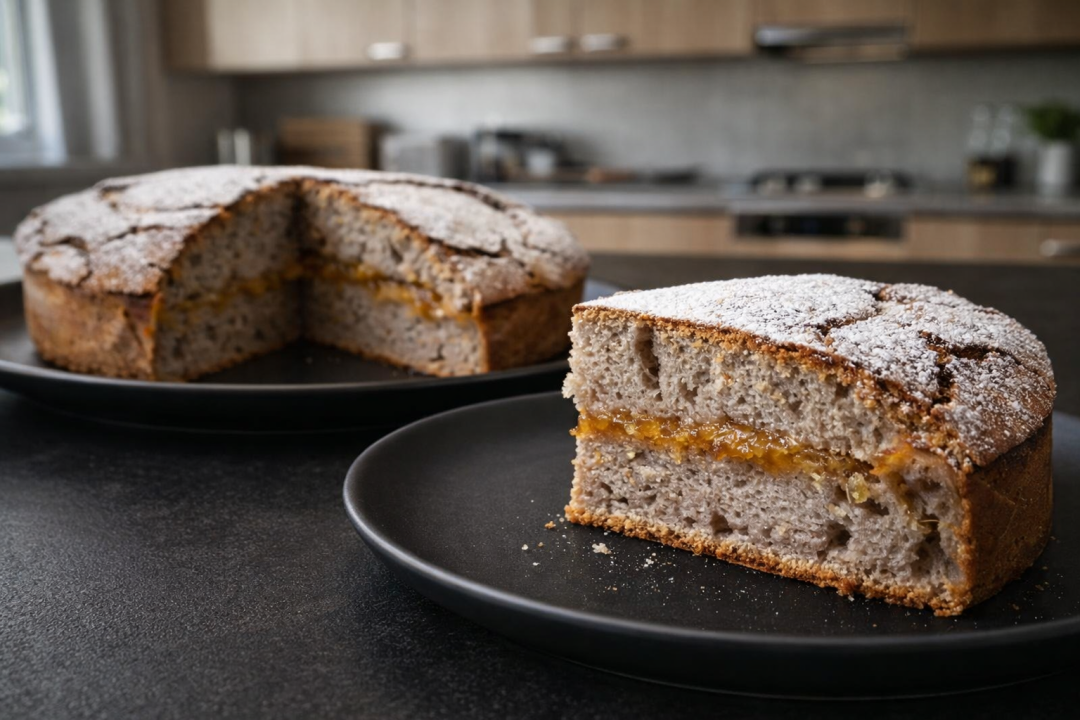
Soft, rustic, and deeply flavorful—an Italian classic
Chestnut flour gives this cake an intense, nutty sweetness that lingers (in the best way).
Ricotta keeps it moist and tender, and the orange marmalade layer adds a bright, citrusy contrast that makes every bite feel special.
Perfect for breakfast, snack time, or dessert.
DOWNLOAD PDF WITH CHESTNUT FLOUR RICOTTA CAKE HERE:
Cooking Times + Servings
Prep Time: 15 minutes
Bake Time: 40 minutes
Cool Time: 20 minutes
Servings: 8–10 slices
Ingredients
Cake Batter
1 cup chestnut flour (about 100g)***
¾ cup 00 flour (about 100g)
1 cup ricotta cheese (about 250g)
2 large eggs
¾ cup granulated sugar (about 150g)
2 Tbsp neutral oil (vegetable/sunflower) (about 30g)
3 Tbsp water (about 50g)
2 Tbsp rum (about 25g)
2 tsp baking powder (about ½ packet)
1 packet vanilla sugar (or 1 tsp vanilla extract)
Filling + Finish
½ cup orange marmalade (more if desired)
Powdered sugar, for dusting
Instructions
Preheat & prep pan
Preheat oven to 350°F (180°C). Line an 8-inch round cake pan with parchment (bottom + sides).Whip eggs + sugar
Beat eggs and sugar until pale, fluffy, and airy (3–4 minutes).Add ricotta, then oil
Mix in ricotta gradually until smooth. Stir in the oil.Mix dry ingredients
In a separate bowl, whisk together chestnut flour, 00 flour, baking powder, and vanilla sugar.Combine (gentle!)
Fold the dry ingredients into the wet mixture by hand, a little at a time.Finish with water + rum
Stir in water and rum until batter is smooth and thick.Bake
Pour into pan and bake 40 minutes, or until a toothpick comes out clean.Cool, slice, fill
Cool 20 minutes, then remove from pan. Once warm (not hot), slice horizontally into 2 layers and spread orange marmalade over the bottom half.Finish
Replace top layer and dust generously with powdered sugar.
Tips & Tricks
If ricotta is watery, drain 15–20 minutes for a fluffier texture.
Add 1 tsp orange zest to the batter for extra aroma.
Don’t overmix after adding flour—fold gently to keep it soft.
***
How to Make Chestnut Flour at Home (Yes—Possible!)
You can make chestnut flour at home, but the key is drying the chestnuts completely so the flour stays shelf-stable and doesn’t clump or spoil.
What you need
Fresh chestnuts (or peeled chestnuts)
Oven or dehydrator
Food processor / high-speed blender
Fine-mesh sieve
Airtight jar
Method A: Oven-Dried Chestnut Flour (Most practical)
Score and roast to peel easily
Cut an “X” on each chestnut. Roast at 400°F (200°C) for 20–25 minutes until shells split.Peel while warm
Remove outer shell + inner skin (the papery layer). (This is easier while they’re still warm.)Slice for faster drying
Cut chestnuts into thin slices or rough chunks.Dry low and slow
Spread on a baking sheet. Dry at 200°F (95°C) for 2.5–4 hours, turning occasionally, until they feel hard and brittle (no softness inside).Tip: Prop the oven door slightly open with a wooden spoon if your oven traps moisture.
Grind
Blend to a fine powder.Sift & regrind
Sift through a fine mesh. Re-grind larger bits and sift again.Store properly
Store in an airtight jar in a cool, dark place. For best freshness: refrigerate or freeze.
Method B: Dehydrator (Best results)
Dry peeled, sliced chestnuts at 135°F (57°C) for 8–12 hours until brittle, then grind + sift.
Important notes
Do not grind chestnuts that still feel soft inside—your flour can turn pasty and spoil faster.
Homemade chestnut flour is often slightly coarser and more aromatic (amazing in cakes).
Nutritional Facts (Approx. per slice, 1/10 cake)
Calories: ~230
Carbs: ~33g
Protein: ~6g
Fat: ~8g
Sugar: ~16g
Fiber: ~2g
(Varies by ricotta and marmalade brand.)

No Comments