
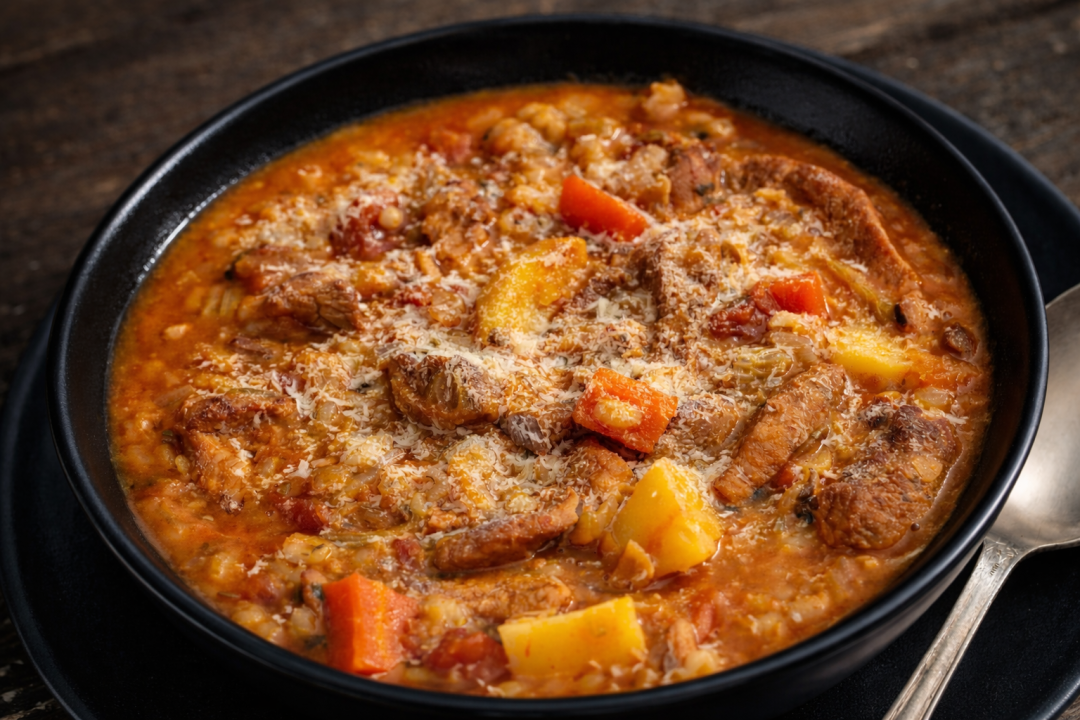
A bowl of winter comfort, the Italian way
If you love the idea of classic Beef Barley Soup but want something that feels unmistakably Italian, this is it.
Think slow-simmered beef, a fragrant soffritto, and pearled barley that turns the broth silky and hearty—without ever feeling heavy. It’s the kind of soup that tastes even better the next day, when everything has had time to mingle, settle, and deepen.
Why this soup feels Italian (even if the name sounds American)
Barley has always belonged in Italy’s cold-weather cooking—especially in the North—where soups and “cucina povera” dishes were built around grains, broth, and whatever the pantry offered.
The American “Beef Barley Soup” is a close relative, but this version leans into Italian cues: olive oil, rosemary and bay leaf, and (optionally) the magic of a Parmigiano Reggiano rind simmered in the pot for extra savory depth.
Barley in Italy: regional traditions that inspired this recipe
Trentino–Alto Adige (South Tyrol): the mountain classic
Up in the Alps, barley is a staple—most famously in Gerstsuppe (zuppa d’orzo). It’s typically thicker and creamier, often made with smoked speck or pancetta, root vegetables, and sometimes a touch of cream. It’s a “ski-lodge” style soup: rustic, rich, and built for cold days.
Veneto & Friuli-Venezia Giulia: brothy, practical, pantry-driven
In the Northeast, barley shows up in brothy soups and everyday winter pots, sometimes with beans, sometimes with cabbage, and often with a lighter hand on tomatoes. The flavor profile is usually clean and savory, with herbs doing the work rather than heavy seasoning.
Lombardy: barley meets hearty braises
In Lombardy, you’ll often find barley served alongside slow-cooked meats or used in soups that feel like a bridge between minestra and stufato. A beef-and-barley soup fits naturally here: beef gets tender through long simmering, and the barley thickens the broth into something spoon-coating and satisfying.
Emilia-Romagna: the Parmigiano touch
This region is all about deep flavor from simple technique. Adding a Parmigiano Reggiano rind to simmering soup is a very “Emilia” move—quietly transformative. You’ll also see broths and soups that are intensely savory without needing much else.
Tuscany & Umbria: barley’s cousin—farro—often takes the spotlight
Move into Central Italy and barley appears, but farro tends to dominate: zuppa di farro, bean soups, and olive-oil-forward bowls. The spirit is similar—grains + legumes + vegetables—but barley is more common farther north.
Southern Italy: lighter soups, different grains, different rhythm
In the South, you’re more likely to see soups built around legumes, seasonal vegetables, and pasta (think pasta e fagioli, pasta e ceci) rather than barley. When grains show up, it’s often wheat-based traditions, and the soups tend to be brighter and lighter, sometimes with a stronger tomato presence depending on the area.
What makes this version “Italian-Style”
It’s all about balance
This recipe keeps the soul of Beef Barley Soup—beef + barley + vegetables—but shifts the center of gravity toward Italian comfort:
Soffritto-first flavor: onion, carrot, celery build sweetness and depth
Herb-forward aromatics: rosemary + bay leaf instead of heavy spice blends
Optional tomato, not tomato-led: just enough to round out the broth
Parmigiano Reggiano rind (optional): the “Nonna trick” that makes it taste like it simmered all day
DOWNLOAD PDF WITH BEEF BARLEY SOUP RECIPE HERE:
Cooking Times
Prep time: 20 minutes
Cook time: 1 hour 40 minutes
Servings: 6
Ingredients
1 1/2 lb beef chuck (or brisket), cut into 1-inch cubes
1 cup pearled barley, rinsed
2 tbsp extra-virgin olive oil
1 medium yellow onion, finely chopped
2 medium carrots, diced
2 ribs celery, diced
3 cloves garlic, smashed or minced
2 tbsp tomato paste
1 can (14.5 oz) diced tomatoes or 1 1/2 cups tomato purée/passata (optional but recommended)
8 cups beef broth (or 6 cups broth + 2 cups water)
1 bay leaf
1 rosemary sprig (or 1/2 tsp dried rosemary)
1 tsp kosher salt, plus more to taste
1/2 tsp black pepper, plus more to taste
1 Parmigiano Reggiano rind (optional, but amazing for flavor)
1 tbsp red wine vinegar or fresh lemon juice (optional, for finishing)
Chopped fresh parsley, for serving
Optional veggies: 1 cup diced potato or 1 cup cut green beans
Instructions
Brown the beef. Heat olive oil in a large heavy pot over medium-high heat. Pat beef dry, then brown in 2–3 batches until nicely colored. Transfer beef to a plate.
Build the soffritto. Reduce heat to medium. Add onion, carrots, and celery. Cook 8–10 minutes until softened, scraping up browned bits. Add garlic and cook 30 seconds.
Toast the tomato paste. Stir in tomato paste and cook 1 minute to deepen flavor.
Add liquids and aromatics. Return beef to the pot. Add diced tomatoes (if using), broth, bay leaf, rosemary, salt, pepper, and the Parmigiano Reggiano rind (if using).
Simmer until tender. Bring to a gentle boil, then reduce to a low simmer (partially covered) for 60–75 minutes, until beef is tender.
Cook the barley. Stir in rinsed barley. Simmer 25–35 minutes, stirring occasionally, until barley is tender.
Adjust consistency. If the soup thickens too much, add a splash of hot broth or water.
Finish. Remove bay leaf, rosemary sprig, and Parmigiano rind. Taste and adjust salt/pepper. Stir in vinegar or lemon juice (optional) to brighten.
Serve. Ladle into bowls, top with parsley, and (optional) a little grated Parmigiano Reggiano.
Tips & Tricks
Parmigiano Reggiano rind = secret weapon. It melts flavor into the broth and adds a subtle, savory richness.
For leftovers: Barley keeps absorbing liquid. Add extra broth when reheating, or cook barley separately and add to bowls as needed.
Best beef cuts: Chuck is ideal—rich and tender after simmering.
More Italian, less “tomatoey”: Use only tomato paste (skip diced tomatoes) for a cleaner brodo-style soup.
Freezer tip: Freeze without barley for best texture; add freshly cooked barley when serving.
Nutritional Facts (approx. per serving)
Calories: 420
Protein: 34 g
Carbs: 30 g
Fat: 18 g
Fiber: 6 g
Sodium: 850 mg
(Estimates vary by broth and beef cut.)
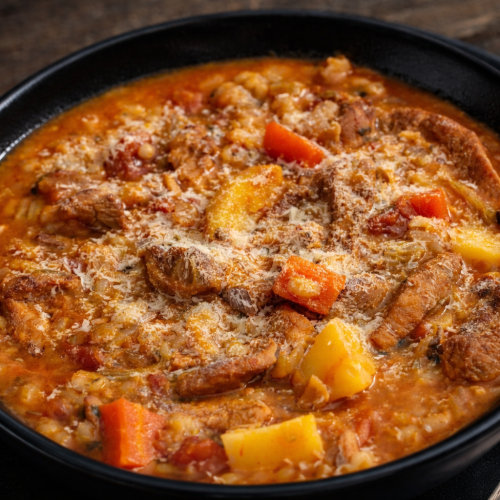
Nonna's Beef Barley Soup
Notes
Ingredients
- 1 1/2 lb beef chuck (or brisket), cut into 1-inch cubes
- 1 cup pearled barley, rinsed
- 2 tbsp extra-virgin olive oil
- 1 medium yellow onion, finely chopped
- 2 medium carrots, diced
- 2 ribs celery, diced
- 3 cloves garlic, smashed or minced
- 2 tbsp tomato paste
- 1 can (14.5 oz) diced tomatoes or 1 1/2 cups tomato purée/passata (optional but recommended)
- 8 cups beef broth (or 6 cups broth + 2 cups water)
- 1 bay leaf
- 1 rosemary sprig (or 1/2 tsp dried rosemary)
- 1 tsp kosher salt, plus more to taste
- 1/2 tsp black pepper, plus more to taste
- 1 Parmigiano Reggiano rind (optional, but amazing for flavor)
- 1 tbsp red wine vinegar or fresh lemon juice (optional, for finishing)
- Chopped fresh parsley, for serving
- Optional veggies: 1 cup diced potato or 1 cup cut green beans
Instructions
- Brown the beef. Heat olive oil in a large heavy pot over medium-high heat. Pat beef dry, then brown in 2–3 batches until nicely colored. Transfer beef to a plate.
- Build the soffritto. Reduce heat to medium. Add onion, carrots, and celery. Cook 8–10 minutes until softened, scraping up browned bits. Add garlic and cook 30 seconds.
- Toast the tomato paste. Stir in tomato paste and cook 1 minute to deepen flavor.
- Add liquids and aromatics. Return beef to the pot. Add diced tomatoes (if using), broth, bay leaf, rosemary, salt, pepper, and the Parmigiano Reggiano rind (if using).
- Simmer until tender. Bring to a gentle boil, then reduce to a low simmer (partially covered) for 60–75 minutes, until beef is tender.
- Cook the barley. Stir in rinsed barley. Simmer 25–35 minutes, stirring occasionally, until barley is tender.
- Adjust consistency. If the soup thickens too much, add a splash of hot broth or water.
- Finish. Remove bay leaf, rosemary sprig, and Parmigiano rind. Taste and adjust salt/pepper. Stir in vinegar or lemon juice (optional) to brighten.
- Serve. Ladle into bowls, top with parsley, and (optional) a little grated Parmigiano Reggiano.

No Comments