
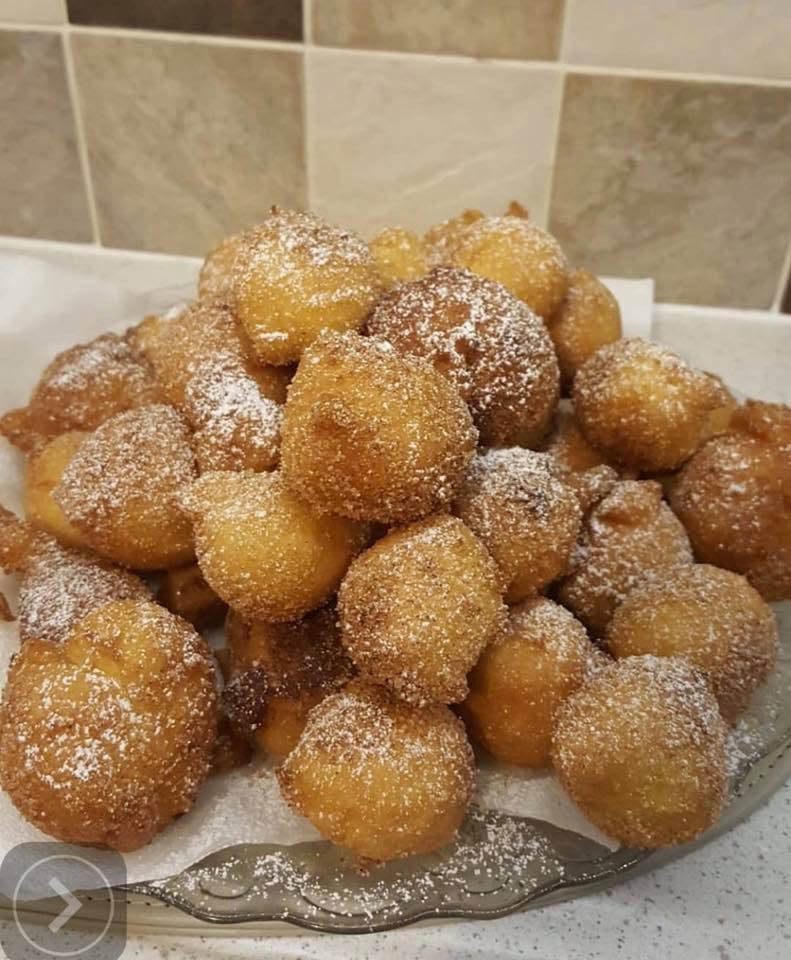
Golden on the outside, wonderfully soft in the center, and finished with a generous dusting of powdered sugar, Sicilian Sfinci are one of those old-fashioned treats that disappear from the platter almost as quickly as Nonna can fry them.
Known in Sicily as sfinci, sfingi, or sometimes spingi depending on the town and family tradition, these rustic fried dough balls are made from a simple yeast dough flavored with citrus and vanilla.
They are especially popular during holidays and family celebrations, although in many Sicilian homes you certainly don’t need a special occasion to make a batch.
🖨️ PRINT OR DOWNLOAD PDF OF THIS RECIPE HERE:
🍽️ Servings
Makes: about 28–32 sfinci
Serves: 8
⏱️ Cooking Time
- Prep Time: 20 minutes
- Rising Time: 1½–2 hours
- Cook Time: 20 minutes
- Total Time: about 2 hours 40 minutes
🛒 Ingredients
For the Dough
- 4 cups (500 g) all-purpose flour
- 1¼ cups (300 ml) whole milk, lukewarm
- ⅓ cup + 1 tablespoon (100 ml) lukewarm water
- ¼ cup (50 g) granulated sugar
- 3½ tablespoons (50 g) unsalted butter, softened
- 2 large eggs, room temperature
- ¾ oz (20 g) fresh yeast
or 2¼ teaspoons (7 g) active dry yeast - ¼ teaspoon fine sea salt
- Finely grated zest of 1 lemon or 1 orange
- 1 teaspoon vanilla extract
For Frying
- Vegetable, sunflower, or peanut oil, as needed
For Serving
- Powdered sugar, generously, as needed
👩🍳 Instructions
1. Activate the Yeast
Pour the lukewarm milk into a small bowl.
Add the yeast and about 1 teaspoon of the sugar. Stir gently and let it stand for 5–10 minutes, until the yeast begins to look foamy.
The milk should be warm, not hot, or it can damage the yeast.
2. Make the Dough
Place the flour and remaining sugar in a large mixing bowl.
Add the lemon or orange zest and vanilla extract.
Pour in the eggs, yeast mixture, and lukewarm water.
Mix with a wooden spoon or your hands until the ingredients begin to come together.
3. Add the Butter
Add the softened butter a little at a time, continuing to work the dough.
Finally, add the salt.
Beat or knead the mixture for several minutes until the dough becomes smooth, elastic, and very soft.
The dough should remain slightly sticky. Resist the temptation to add too much extra flour, because a soft dough produces lighter and fluffier sfinci.
4. Let the Dough Rise
Cover the bowl with plastic wrap or a clean kitchen towel.
Let the dough rise in a warm, draft-free place for about 1½–2 hours, or until doubled in size.
5. Heat the Oil
Pour several inches of frying oil into a deep, heavy-bottomed pot.
Heat the oil to approximately 340–350°F (170–175°C).
Maintaining the proper temperature is important: oil that is too hot will brown the sfinci before the centers are cooked.
6. Shape the Sfinci
Lightly oil your hands or dip two spoons in water.
Take small portions of the risen dough and gently form them into rough balls.
Traditional sfinci do not need to be perfectly round. Their slightly irregular appearance is part of their rustic character.
7. Fry
Carefully drop a few pieces of dough into the hot oil.
Do not overcrowd the pot.
Fry for approximately 3–4 minutes, turning them several times so they cook evenly.
The sfinci should become puffed and deep golden brown.
8. Drain
Remove them with a slotted spoon and place them on a tray lined with paper towels.
Continue until all the dough has been fried.
9. Finish with Powdered Sugar
Allow the sfinci to cool slightly.
Dust them generously with powdered sugar just before serving.
Serve warm or at room temperature.
👵 Nonna’s Tips
Keep the dough soft. A common mistake is adding too much flour because the dough feels sticky. The softer dough is what gives these Sicilian fritters their light interior.
Watch the oil temperature. Aim for 340–350°F (170–175°C). If the sfinci become dark too quickly, lower the heat.
Make them small. Large dough balls can remain raw in the center. About a heaping tablespoon of dough per sfinci is ideal.
Use citrus zest. Lemon is wonderful, but orange zest gives the sfinci an especially Sicilian aroma.
Serve them fresh. Like most fried dough, sfinci are at their absolute best on the day they are made.
🍇 Traditional Variations
Many Sicilian families have their own version.
You can add:
- ½ cup raisins, soaked and drained
- A small pinch of cinnamon
- 1 tablespoon Marsala
- A few lightly crushed fennel or anise seeds
- Small pieces of candied orange peel
Sicilian Potato Sfinci
Another traditional variation includes boiled mashed potatoes in the dough.
The potatoes make the interior particularly tender and help the sfinci stay soft for longer.
For this version, approximately 7 oz (200 g) cooked and mashed potatoes can be incorporated into the dough. Reduce the liquid slightly and add it gradually until the proper soft consistency is reached.
❓ Sfinci or Sfingi?
Both names are commonly encountered.
Sfinci is the Sicilian name, while sfingi is a common Italianized spelling and pronunciation used by many Sicilian-American families.
These simple fried sfinci should not be confused with Sfince di San Giuseppe, the large Palermo-style pastries traditionally topped or filled with sweet ricotta cream, chocolate, pistachios, and candied fruit.
📊 Nutritional Facts
Approximate values per sfinci, based on 30 pieces and excluding variations.
| Nutrition | Amount |
|---|---|
| Calories | 115 kcal |
| Total Fat | 5 g |
| Saturated Fat | 1.5 g |
| Carbohydrates | 15 g |
| Sugars | 3 g |
| Protein | 2 g |
| Fiber | 0.5 g |
| Sodium | 35 mg |
Nutritional values are estimates and can vary depending on the amount of oil absorbed during frying.


No Comments